


How to Stretch Wrap a Pallet by Hand: Step-by-Step Guide
A poorly wrapped pallet can shift during handling, create unnecessary shipping problems, or require additional work before leaving the warehouse. For smaller businesses and fulfillment
Cold storage and refrigerated shipping create challenges that ordinary packing operations don’t always encounter. When cartons are sealed in a cold environment or move between different temperatures, the wrong tape can make reliable package sealing more difficult.
Choosing packing tape for cold temperatures starts with understanding the adhesive, the carton material, and the conditions where the tape will be applied. A tape designed for refrigerated operations can be a better choice than one intended primarily for routine packaging.
At 4Tapes, products such as Primetac 615 Clear Hot Melt Tape are specifically described as performing in cold temperatures, making them worth considering for businesses handling refrigerated shipments.
Pressure-sensitive packaging tapes rely on adhesive contact with the carton surface.
When temperatures fall, some adhesives become less effective at making that initial contact. Cold cardboard, moisture, and temperature changes can complicate the sealing process.
For a warehouse preparing refrigerated shipments, this means tape selection deserves more attention than it might in a consistently heated packing area.
The goal isn’t simply to find a tape that feels sticky when you touch it. It’s to select one that forms and maintains an appropriate bond under the expected conditions.
Three factors are particularly important:
Understanding these differences can help prevent problems before packages enter storage or transportation.
Not every carton sealing tape is designed for the same working conditions.
When comparing products for cold storage and refrigerated shipping, consider the adhesive formulation, published temperature specifications, and carton requirements.
4Tapes carries Primetac carton sealing tapes made with synthetic rubber hot melt adhesive.
The premium 615 and 620 grades are described as having additional adhesive to support performance in cold-temperature applications.
These products are intended for situations where dependable adhesion is important, including warehouse operations and refrigerated shipping.
However, the presence of additional adhesive doesn’t mean a tape will perform under every possible temperature condition.
Always compare the product specifications with the actual working environment.
This distinction is especially important when choosing packing tape for cold temperatures.
Application temperature describes the conditions under which the tape is applied to a surface.
Operating temperature describes the temperature conditions the tape is intended to tolerate during use.
A tape that performs after being applied under suitable conditions may not necessarily bond properly if it is first applied to an extremely cold carton.
Primetac 615 has a published operating temperature range of 14°F to 140°F.
That specification helps identify the product’s intended working range, but it should not be mistaken for permission to apply the tape at any temperature within that range.
Confirm application requirements before using a new tape in a refrigerated packing area.
The carton material also matters.
Recycled corrugated cardboard can present different bonding characteristics from boxes manufactured using virgin materials.
All Primetac hot melt carton sealing tapes carried by 4Tapes are described as engineered for use on 100% recycled corrugated.
For facilities using recycled shipping cartons, this compatibility is another reason to consider the available Primetac grades.
Two of the most relevant products for refrigerated shipping are Primetac 615 and Primetac 620.
Both use synthetic rubber hot melt adhesive, but they differ in width, thickness, and intended box applications.
| Feature | Primetac 615 | Primetac 620 |
|---|---|---|
| Tape width | 2 inches | 3 inches |
| Total thickness | 1.8 mil | 1.9 mil |
| Adhesion to steel | 42 oz/in | 46 oz/in |
| Tensile strength | 20 lb/in | 22 lb/in |
| Roll length | 110 yards | 110 yards |
| Rolls per case | 36 | 24 |
| Recommended application | Medium-weight cartons, cold temperatures | Larger or heavier cartons, cold temperatures |
These differences provide a practical starting point for selecting the appropriate product.
Primetac 615 is a premium, general-purpose carton sealing tape designed for medium-weight boxes.
Its 2-inch width makes it appropriate for many standard shipping cartons.
The product uses a 1.8 mil BOPP construction with synthetic rubber hot melt adhesive and is described as providing quick tack.
Primetac 615 is also engineered for recycled corrugated and is listed for cold-temperature use.
For fulfillment centers and refrigerated warehouses sealing standard cartons, it may provide the combination of width and adhesive performance needed for routine operations.
The product is supplied in 110-yard rolls, with 36 rolls per case.
Primetac 620 Clear Hot Melt Tape is an industrial-grade product designed for more demanding carton sealing applications.
It has a 3-inch width and 1.9 mil thickness.
The wider tape can provide broader coverage across carton seams, making it useful for larger, heavier, or overstuffed shipping boxes.
Primetac 620 is also described as suitable for cold-temperature applications and recycled corrugated.
Its listed uses include manual and automatic carton sealing, cold storage, tabbing, and splicing.
The product comes in 110-yard rolls, with 24 rolls per case.
For businesses shipping larger cartons, the additional width may be worthwhile.
Tape width should match the carton and the requirements of the shipment.
For most standard boxes, 2-inch carton sealing tape is a practical choice.
Primetac 615 provides this width and is designed for medium-weight cartons.
Larger or heavier cartons may benefit from the broader coverage of 3-inch tape.
Primetac 620 is designed for these more demanding applications.
However, using wider tape doesn’t automatically solve every packaging problem.
If a box is too weak, overfilled, or poorly constructed, adding more tape may not provide the protection needed.
The carton itself should be appropriate for the weight and dimensions of its contents.
Refrigerated shipping and freezer shipping are not necessarily the same thing.
A refrigerated carton may encounter temperatures above freezing, while frozen shipments can be exposed to substantially lower conditions.
Primetac 615 has a published operating temperature range beginning at 14°F, so its specifications should not be assumed to cover temperatures below that limit.
The product listings identify both 615 and 620 as suitable for cold-temperature applications, but that does not establish compatibility with every freezer environment.
If your shipments will be stored or transported below the published operating range, confirm tape suitability before use.
Also determine where the cartons will actually be sealed.
Applying tape in a temperature-controlled packing room before moving the boxes into cold storage can present different conditions from applying tape directly inside a freezer.
For specialized frozen shipping operations, product specifications and testing should guide the decision.
Even when using a suitable adhesive tape, packing procedures can affect the finished seal.
Check for damaged flaps, weak seams, moisture, and debris.
A damaged box may need to be replaced rather than reinforced with additional tape.
Make sure the carton is appropriate for the shipment.
Loose dust, moisture, and other contaminants can interfere with adhesive contact.
Check that the carton surface is suitable for tape application.
If cartons have developed condensation after moving between different temperatures, address that condition before sealing.
Use the tape within its recommended application conditions.
Don’t assume a product described as cold-temperature tape can be applied successfully to an extremely cold surface.
If cartons are being sealed in a refrigerated area, verify the appropriate application temperature.
Pressure-sensitive tape needs adequate contact with the carton.
Apply the tape smoothly and evenly, avoiding wrinkles and lifting edges.
A suitable manual dispenser or automated case sealer can help establish a repeatable process.
Inspect taped cartons before they enter storage or transportation.
Look for loose ends, lifting edges, or gaps that may indicate poor adhesion.
If problems repeatedly occur with a particular combination of tape and cardboard, test alternatives rather than automatically applying additional layers.
For more background on sealing problems, see our article explaining why tape failure happens during shipping.
Businesses handling refrigerated goods often rely on consistent packaging procedures.
When employees use different tapes or application methods, finished seals may vary.
Selecting an appropriate tape and documenting the process can help establish more consistent results.
Standardizing also makes it easier to monitor material consumption and identify recurring problems.
For example, if cartons from one supplier consistently require additional attention, the issue may involve the cardboard rather than the tape.
A repeatable process makes these differences easier to recognize.
For businesses handling substantial shipping volume, reducing rework and unnecessary material use can be as important as the price of the tape itself.
The right packing tape depends on the application temperature, operating conditions, and carton requirements. Primetac 615 and 620 are formulated for cold-temperature carton sealing and have additional adhesive. Primetac 615 is suitable for medium-weight boxes, while the wider Primetac 620 is intended for larger or heavier cartons.
Some general-purpose packing tapes may work under certain refrigerated conditions, but performance depends on the adhesive and how the tape is applied. A tape specifically described as suitable for cold temperatures may be a better choice. Check the product specifications and test the complete packaging process before adopting it.
Primetac 615 has a published operating temperature range of 14°F to 140°F. That does not establish performance at temperatures below 14°F or confirm suitable application conditions inside a freezer. If your operation involves lower temperatures, verify compatibility before selecting the tape for those shipments.
Wider tape can provide greater coverage across carton seams, particularly on larger or heavier boxes. However, width alone doesn’t determine cold-temperature performance. The adhesive formulation, application conditions, and carton construction are also important. Primetac 615 is 2 inches wide, while Primetac 620 is 3 inches wide.
Primetac 615 and 620 are both described as suitable for recycled corrugated cartons. This makes them relevant to businesses using boxes manufactured from recycled materials. Actual sealing performance still depends on carton condition, surface preparation, application temperature, and the requirements of the shipment.
When your business handles refrigerated shipping or cold storage, choosing appropriate packing tape can help keep cartons sealed and operations running smoothly.
4Tapes carries Primetac 615 and Primetac 620, along with other products in our carton sealing tape selection.
We offer in-stock products, low minimums, and straightforward online ordering so businesses can order what they actually need.
For specialized applications, custom quantities, or larger orders, contact the 4Tapes team to discuss product selection and bulk pricing.
A poorly wrapped pallet can shift during handling, create unnecessary shipping problems, or require additional work before leaving the warehouse. For smaller businesses and fulfillment
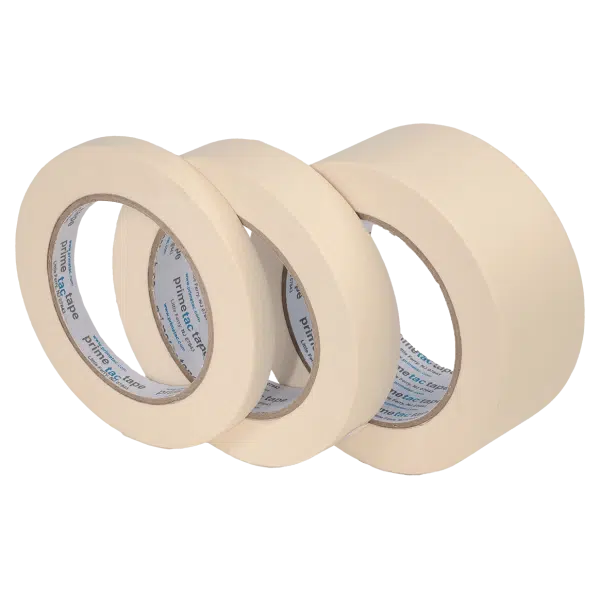
Painter’s tape and masking tape look similar, but using the wrong one can create extra cleanup, uneven paint edges, or unnecessary material costs. Both products
A tear in a shrink wrap cover can create a problem for anything stored beneath it. Whether you’re protecting a boat, covering an RV, or
We often can grant special pricing for custom or large orders. Request a custom quote below!